This project started with a personal observation that kept repeating itself in conversations and real life: talented designers struggled to find the right work in new environments, while homeowners felt overwhelmed and alone when starting a renovation.
I turned that friction into a product concept, a two sided experience that connects homeowners with vetted professionals and helps both parties align on scope, budget, and availability early. I led the research and experience design, from interview planning and synthesis to information architecture and UI decisions.
The work matters because renovations carry high emotional and financial stakes, and a single mismatch can cost months of time and trust.
Homeowners often enter renovations with low confidence and limited process knowledge. They struggle to know where to start, what fair pricing looks like, and who they can trust — frequently relying on a single recommendation, making it hard to compare options, verify quality, or check availability.
In parallel, architects and designers face visibility and networking barriers, especially when new to a city or early in their career. Both sides want to find each other, but they lack a reliable, structured way to match and set expectations before work begins.
I designed a balanced ecosystem that supports trust, transparency, and predictability from the first interaction — reducing uncertainty upfront so both sides can move forward with confidence.
The research showed that the core issue was not a lack of demand, it was a lack of clarity. I framed the project goals around what would reduce anxiety for homeowners while improving visibility and fit for professionals. Each goal ties directly to the moments where projects typically stall — like choosing a provider, confirming availability, and aligning budget and scope.
Increase homeowner confidence at project start by helping users identify the right next step and compare multiple professionals.
Improve professional discovery by enabling portfolio first evaluation and clearer positioning for the right project types.
Reduce expectation mismatches by capturing budget, scope, and availability upfront, before a homeowner requests a consultation.
To design an effective solution, I conducted in-depth interviews with both homeowners and industry professionals — architects and interior designers. This allowed me to pinpoint the exact friction points where the renovation process breaks down for both parties.
I ran deep dive interviews with two groups: homeowners who recently renovated or planned to renovate, and architects or designers who actively take on client projects. I recruited participants to represent different experience levels, including homeowners at the very start and professionals new to a city or earlier in their career.
The objective was to understand where progress breaks down — from the first search and first conversation to budgeting and scheduling. I focused on mapping moments of uncertainty, what signals people use to make decisions, and what information they wish they had earlier.
Homeowners often enter the process with high motivation but low situational awareness. My research highlighted a significant lack of transparency in the early stages.
Most users didn't know how to start or where to find trusted professionals. They often relied on word-of-mouth rather than comparing portfolios and client feedback.
Finding verified portfolios and checking professional availability in real-time were major hurdles. The lack of structured discovery forced guesswork at every step.
Users struggled with unpredictable costs. They often lacked a baseline for what a project should cost, leading to "budget creep" and stalled timelines.
Architects and designers aren't just looking for "any" client — they are looking for sustainable growth and clear communication.
Finding new projects is difficult, especially for those new to a city or early in their careers. Many struggle with how to effectively market their services and showcase previous work.
Professionals often deal with clients who have limited budgets but high-end expectations. Explaining these logistical realities is a recurring struggle that erodes time and trust.
Despite market competition, designers value working with peers to share experiences and streamline complex project workflows — an underserved need.
I used a survey to validate whether the interview themes held across a broader set of homeowners and professionals, and to quantify which problems mattered most. Key questions focused on how people currently find each other, what signals they trust most, and which factors block progress.
I applied the results to prioritize features that reduce uncertainty early — especially comparison tools, budget alignment prompts, and availability visibility. The survey targeted homeowners planning renovations and working professionals who market services independently.
A majority of homeowner respondents prioritized transparent pricing expectations over aesthetic inspiration when deciding to contact a professional.
Many professionals reported that lead quality matters more than lead volume, because mismatched budgets waste time and erode trust.
Across both groups, participants ranked portfolio proof and verified feedback as the strongest drivers of confidence before a first conversation.
I created personas by clustering interview and survey patterns into consistent needs, motivations, and blockers on both sides of the marketplace. I used the personas to keep decisions grounded in real tradeoffs, balancing homeowner desire for reassurance with professional desire for qualified requests.
Recently purchased an older home and is eager to modernize it. She has high aesthetic standards but zero technical experience in construction or design.
She feels paralyzed by the "Starting Line Paradox," having limited knowledge of the renovation lifecycle.
To find a professional she can trust based on verified portfolios and peer feedback rather than just a single friend's word.
To understand "How much should this cost?" before signing a contract to avoid the "Budget Black Box."
Doesn't know where to locate portfolios or check for professional availability easily.
Fears hidden charges and unpredictable budget creep that could stall her project.
Feels forced to hire by default because she lacks a platform to compare options.
Recently moved to a new city to start his own firm. He is highly skilled but currently lacks the local network to sustain a steady stream of projects.
He finds it difficult to find new clients and market his services effectively in a competitive, word-of-mouth-driven market.
To grow his professional network and find a consistent flow of projects to build his local reputation.
To work with clients who have realistic budget expectations and an appreciation for the design process.
Struggles to showcase previous work to a targeted audience of potential clients.
Faces challenges explaining the reality of costs to clients who have limited budgets but high-end demands.
Misses the creative synergy of collaborating with other designers to share ideas and manage workloads.
After completing interviews, I used an Affinity Diagram to distill vast qualitative data from both homeowners and professionals into actionable patterns. By clustering related ideas, I moved beyond individual anecdotes to identify the core thematic pillars of the renovation breakdown.
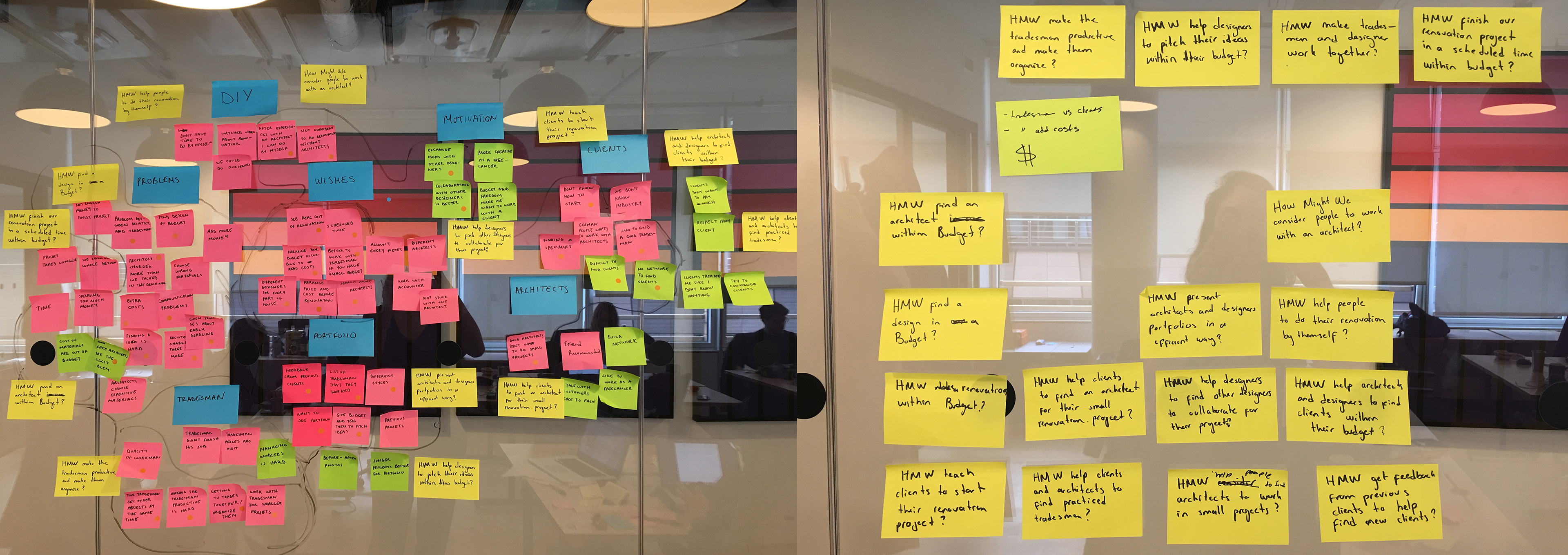
Pinpointing where different users faced identical frustrations across both sides of the marketplace.
Visualizing the most frequent roadblocks such as "Trust Deficits" and "Budget Opacity."
Transforming broad complaints into specific areas for product intervention.
With a clear understanding of user frustrations, I translated pain points into "How Might We" statements. This shifted focus from the problem to the potential solution. I conducted a dot-voting session with four participants to prioritize the statements with the highest potential for innovation.
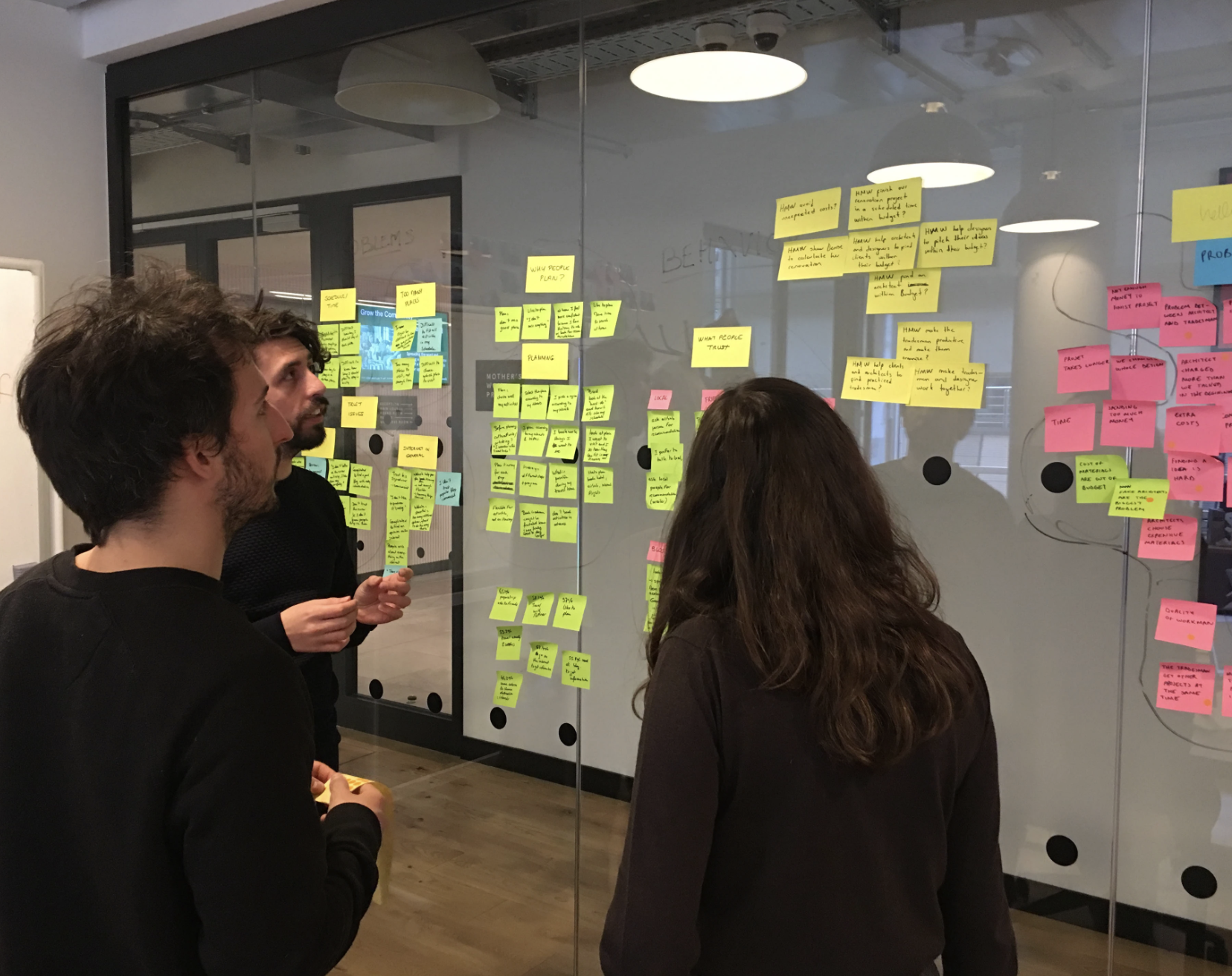
How might we empower clients to accurately calculate and manage their renovation costs?
How might we streamline the way architects and interior designers discover and secure new clients?
How might we help clients find the right architectural talent that fits both their aesthetic vision and their budget?
The end-to-end journey starts when a homeowner feels the need to renovate and searches for direction. The journey breaks when users cannot compare professionals, cannot verify quality, or cannot estimate costs.
I used this journey to pinpoint the moments where the product must add clarity — especially at discovery, qualification, and first contact.
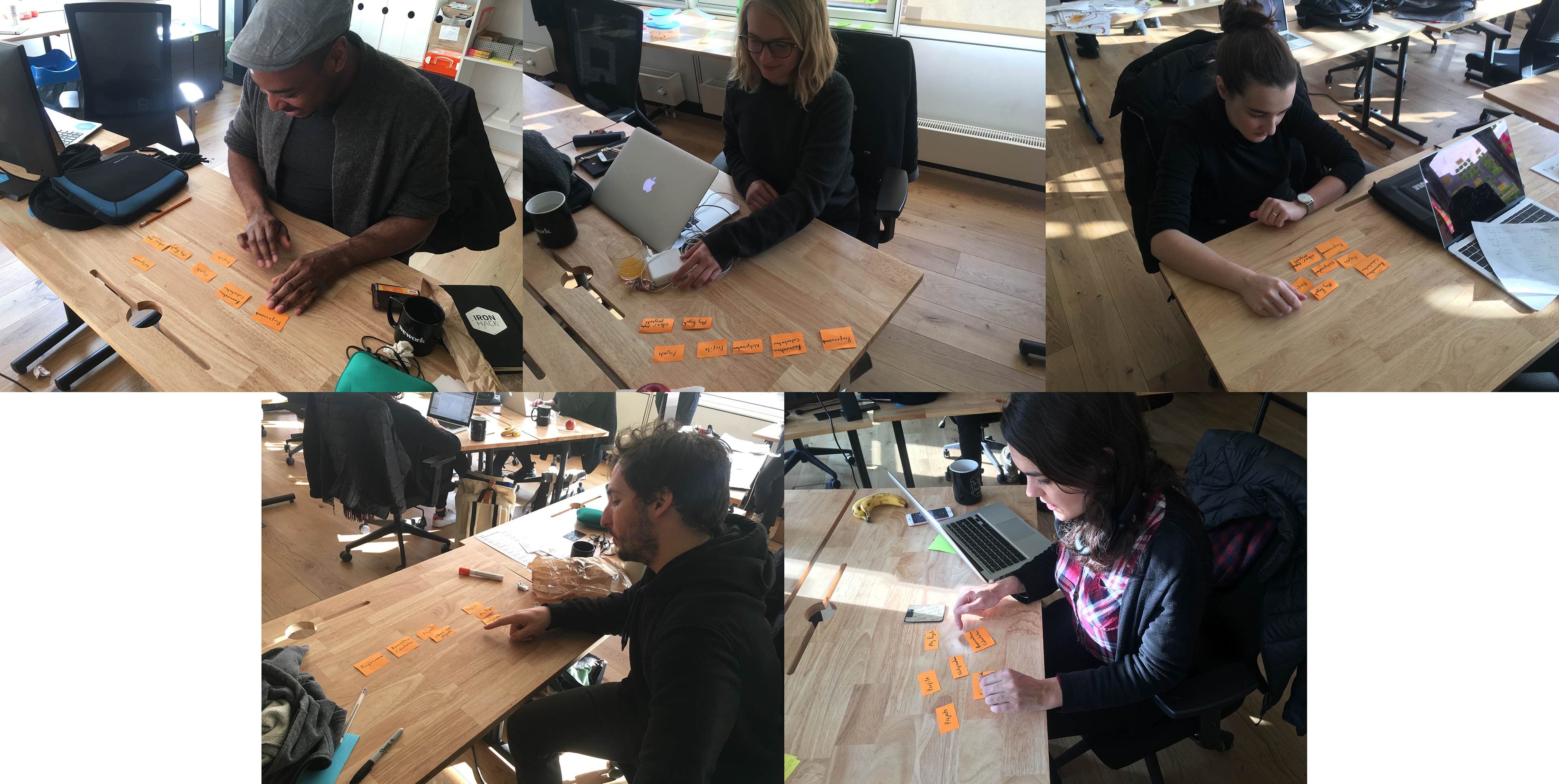
I ran a card sorting exercise to understand how homeowners expect renovation information and professional profiles to be organized. Participants consistently grouped content around project type, budget range, timeline, and proof of work — rather than around professional titles alone.
A second pattern emerged around trust building elements — reviews, credentials, and before and after galleries — which users wanted to access early. These insights shaped the navigation and filtering model, pushing key decision inputs to the top of the experience.
The final structure reflected how users think when they feel uncertain: first reduce risk, then compare options, then contact.
Following card sorting and initial site mapping, I moved into rapid prototyping to test the core user flows. I conducted moderated usability tests with two homeowners and two architects using low-fidelity wireframes — critical in identifying friction points before committing to visual design.
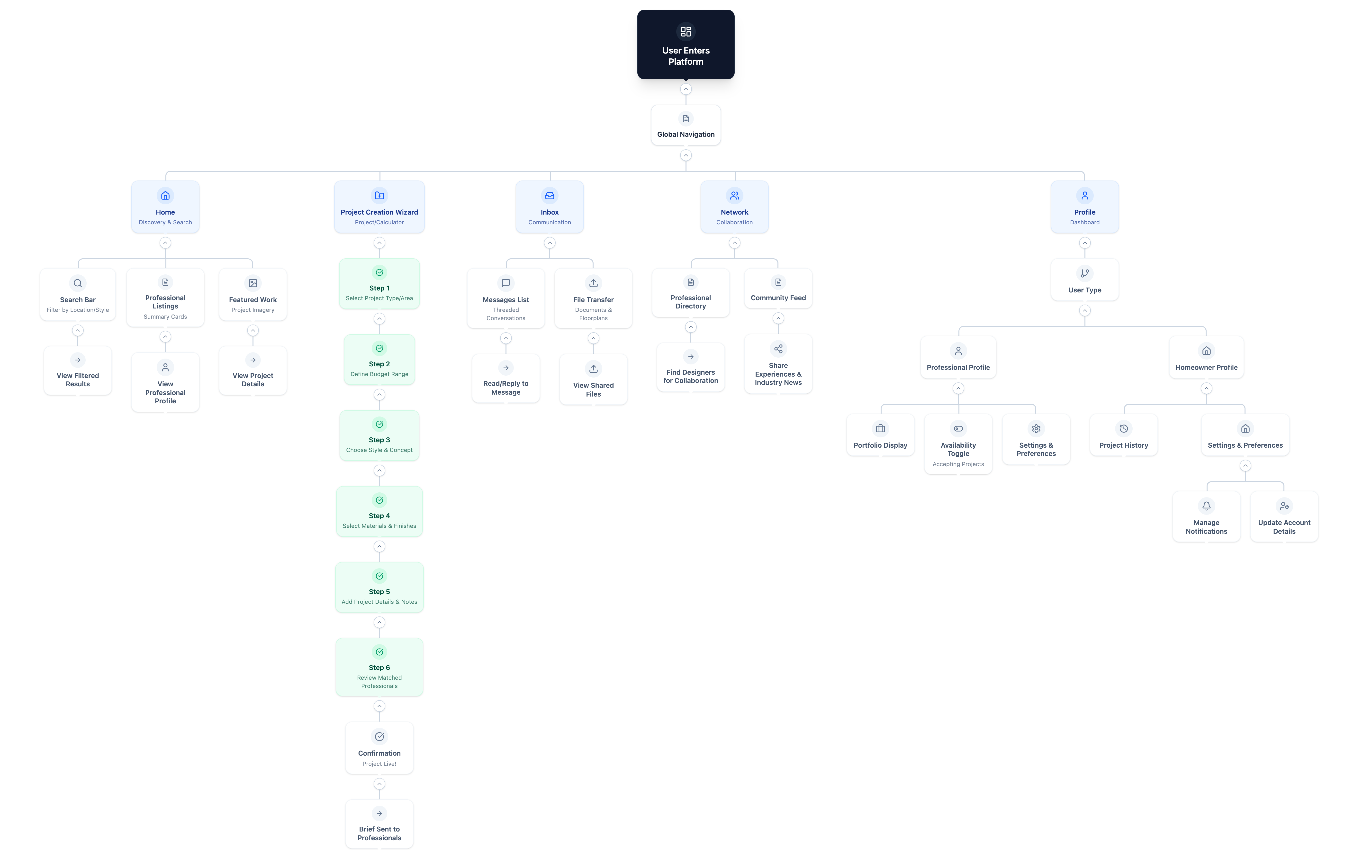
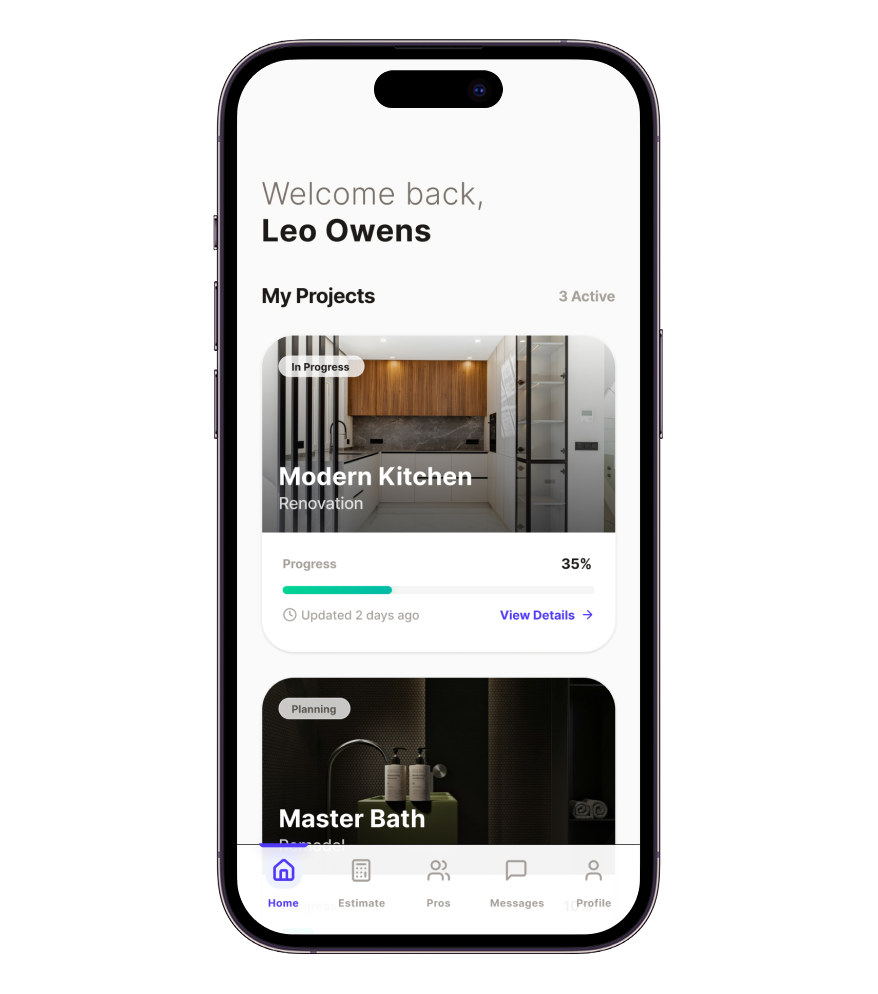
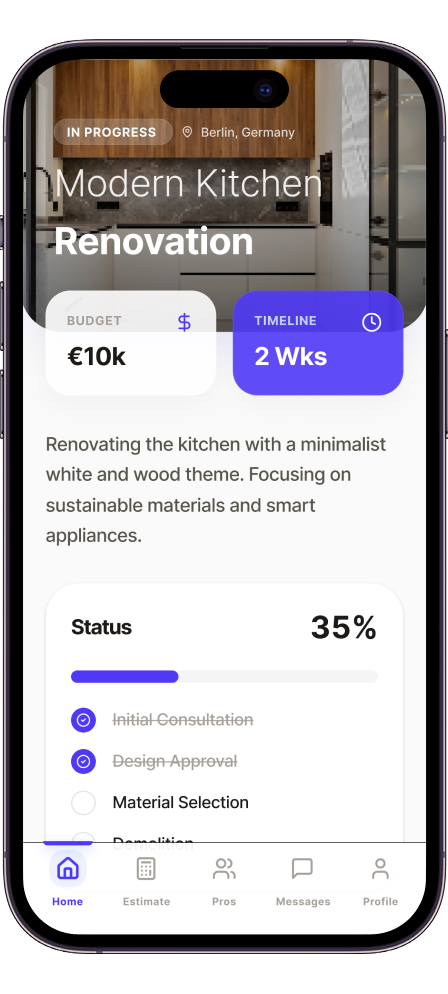
I designed the interface to lower the barrier to entry by replacing user anxiety with clarity. For homeowners, the experience prioritizes "proof-first" browsing using portfolio-forward cards and trust indicators to build confidence before the first click.
To solve financial and logistical friction, I integrated budget-calibration prompts and early-stage timeline expectations. For professionals, the UI shifts focus from quantity to quality, using structured case studies to ensure they are discovered by the right clients, not just the loudest ones.
Dynamic Scoping
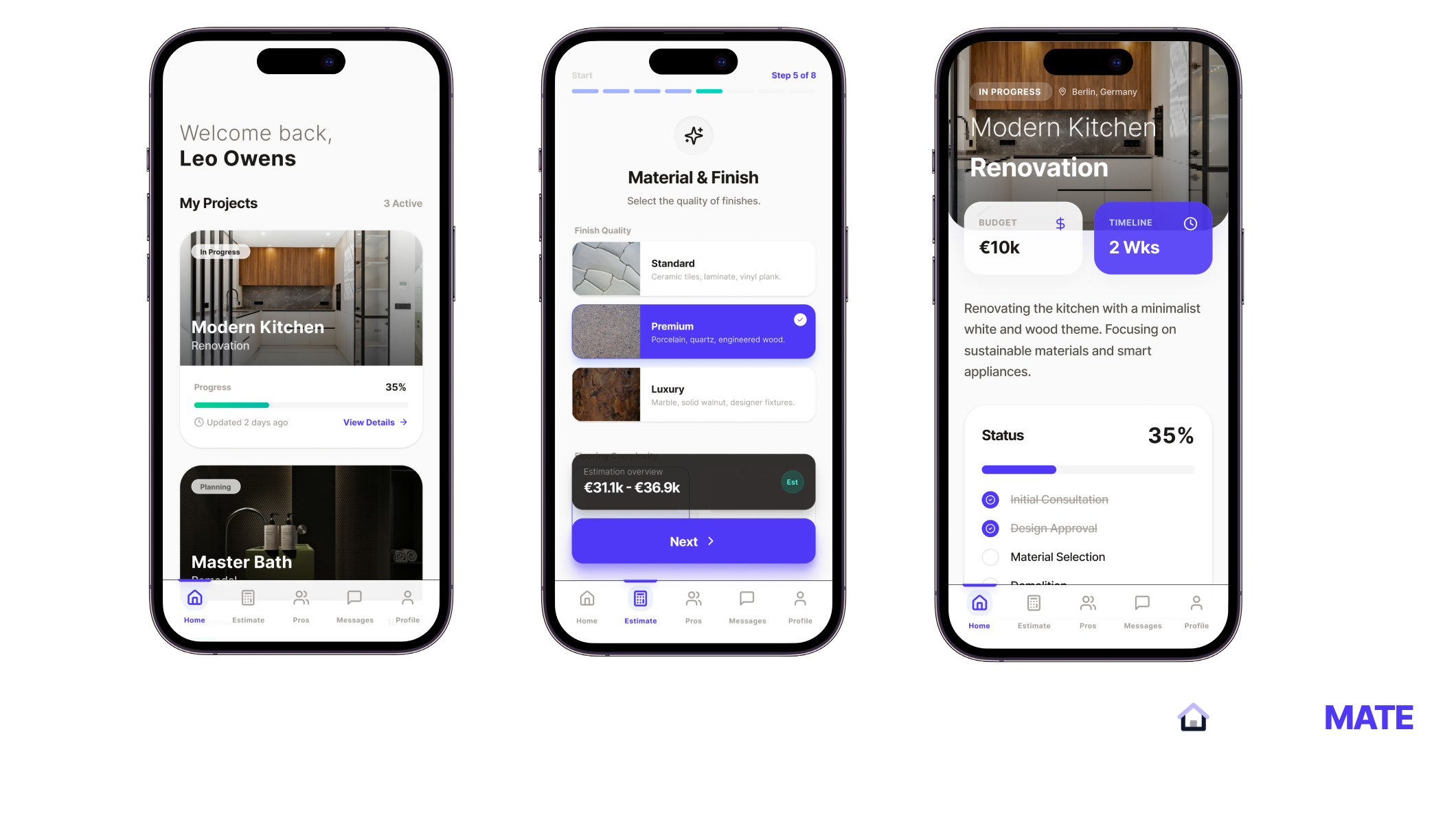
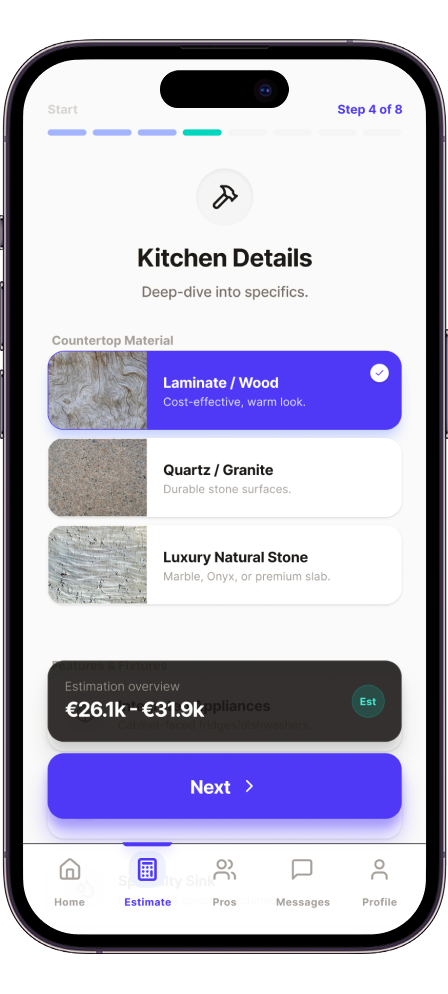
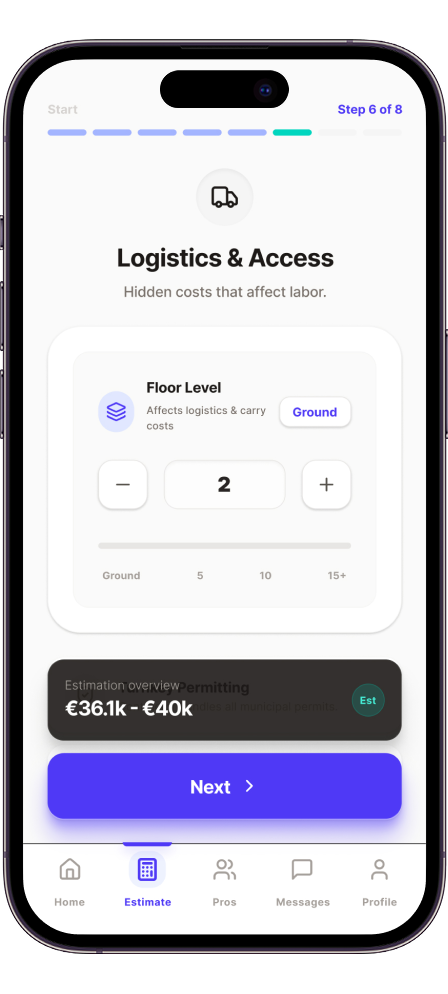
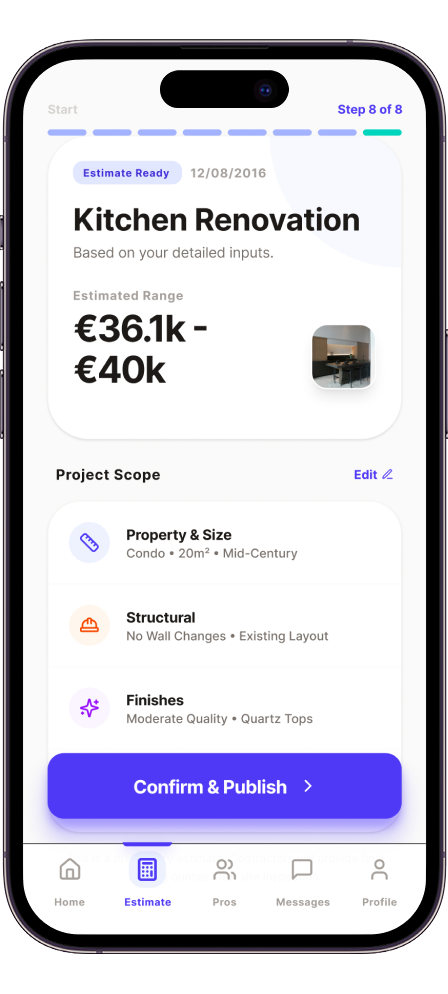
I implemented a "Linear-Editable" flow where users define the room, type, and size. To reduce cognitive load, previous answers remain visible and interactive, allowing users to pivot their scope without restarting the session.
Tiered Value Propositions
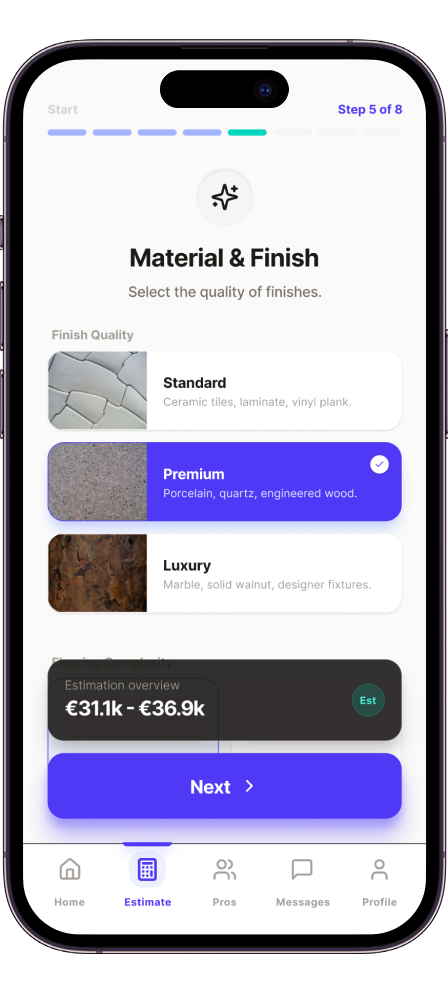
To demystify pricing, I designed a service-selection interface featuring Basic, Moderate, and High quality tiers. Each selection is supported by clear, contextual explanations so users understand the cost-to-value ratio of different finishes.
The Conversion Bridge
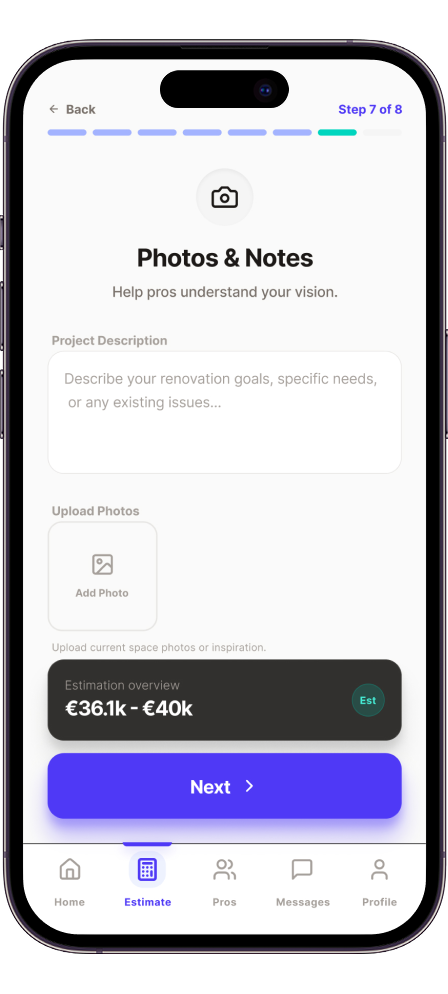
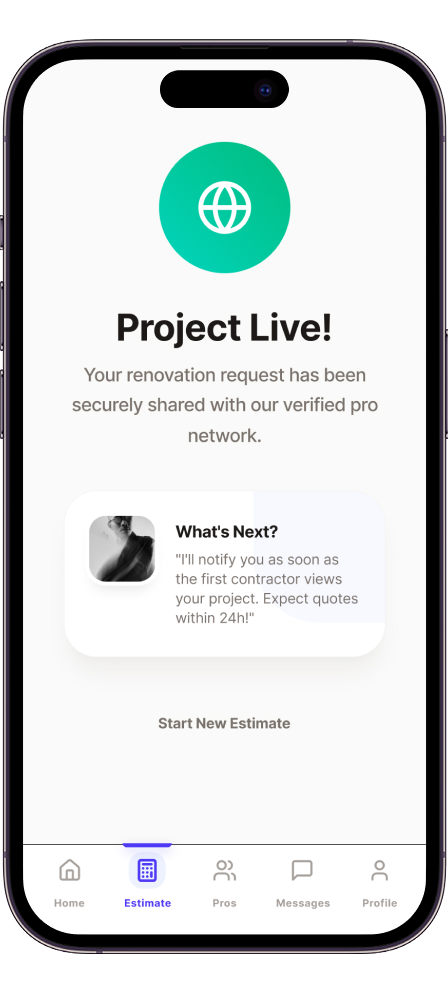
The survey culminates in a comprehensive summary that users "confirm" to generate a public project brief. This transforms a personal estimate into a professional lead, inviting architects and contractors to engage with data-backed project details.
Clarity and Scannability
Using a clean, card-based layout to separate complex service categories.
Visual Reinforcement
Swapping technical jargon for visual tiering to help users "see" the difference in quality levels.
Real-Time Feedback
Ensuring the "likely cost" updates dynamically to provide immediate financial context.
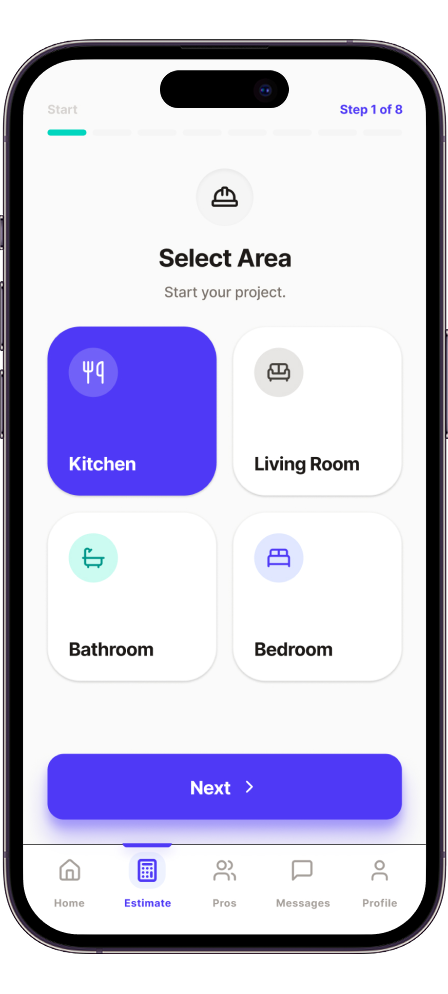
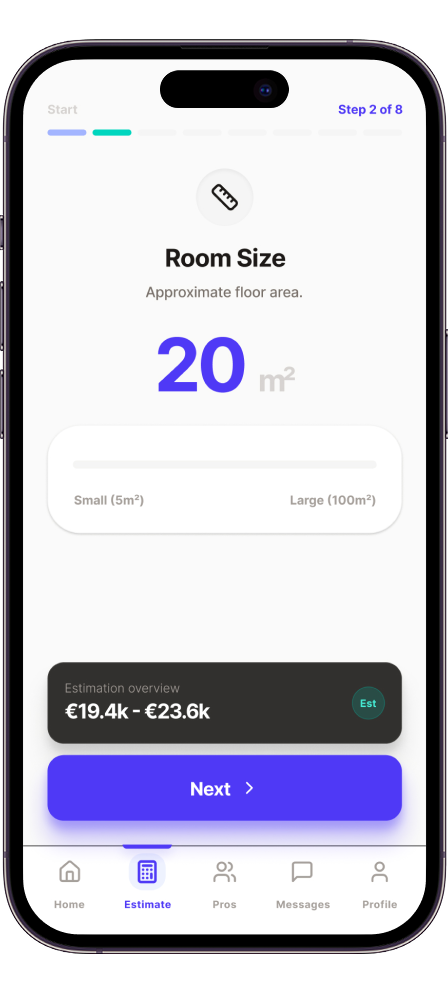
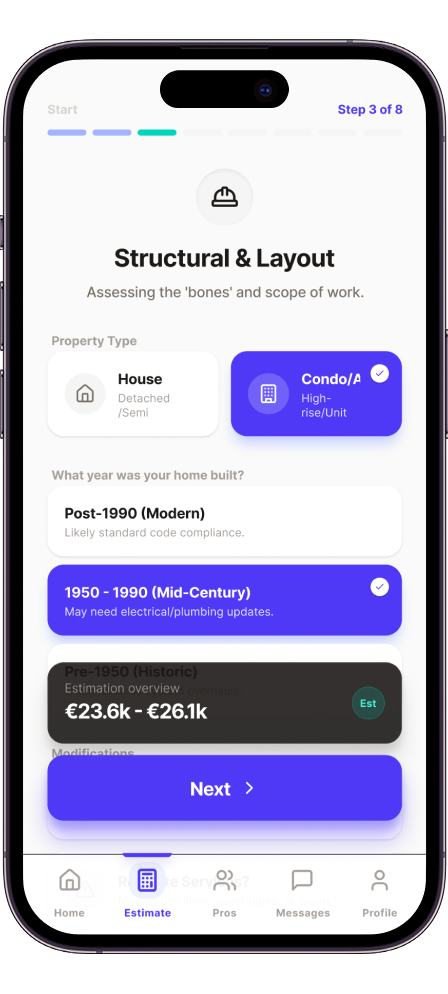
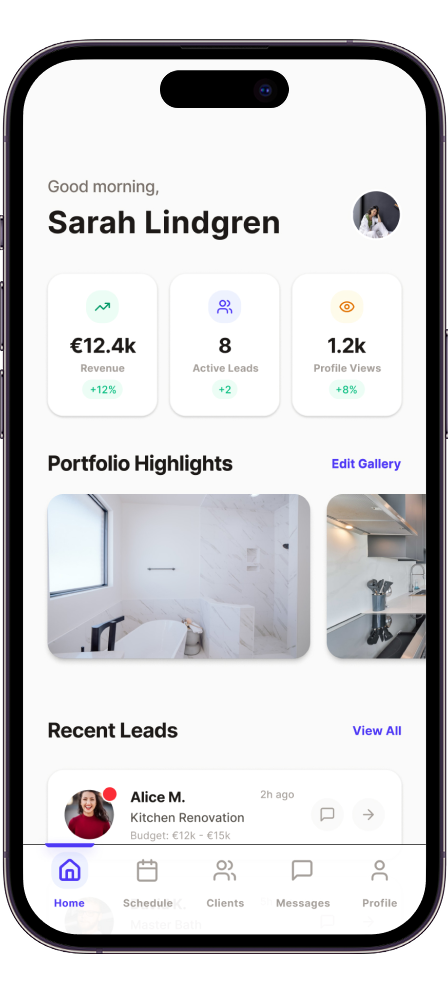
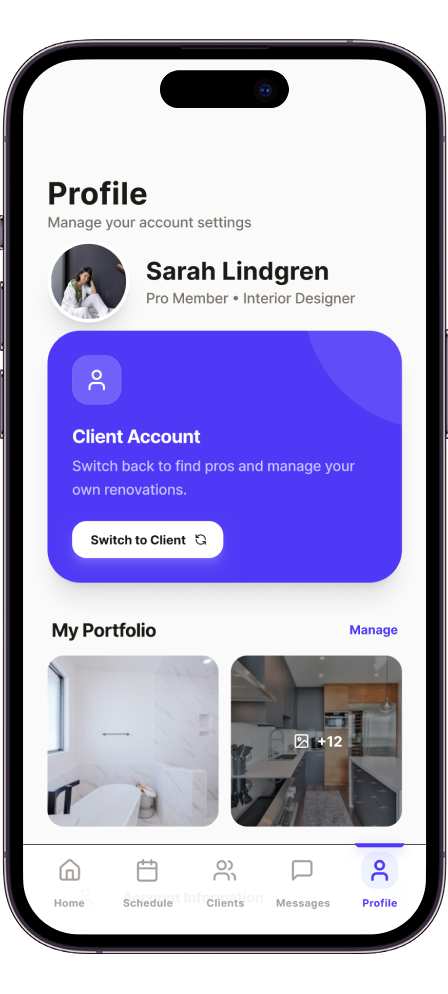
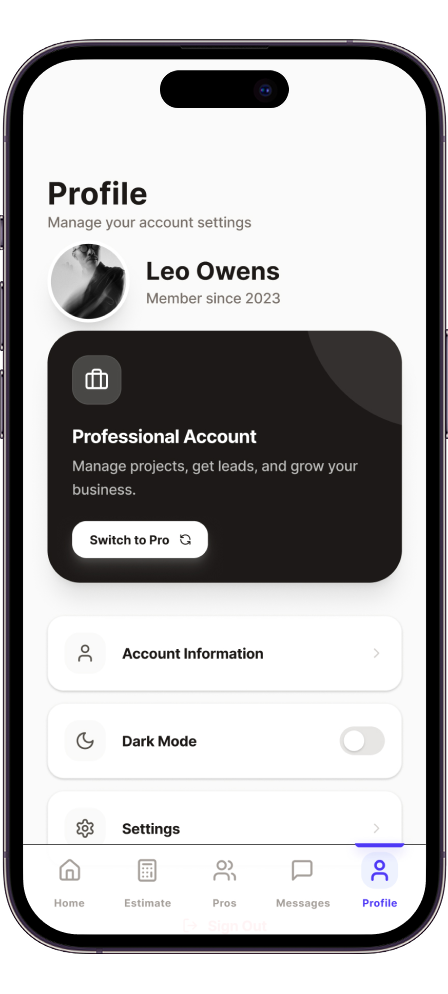
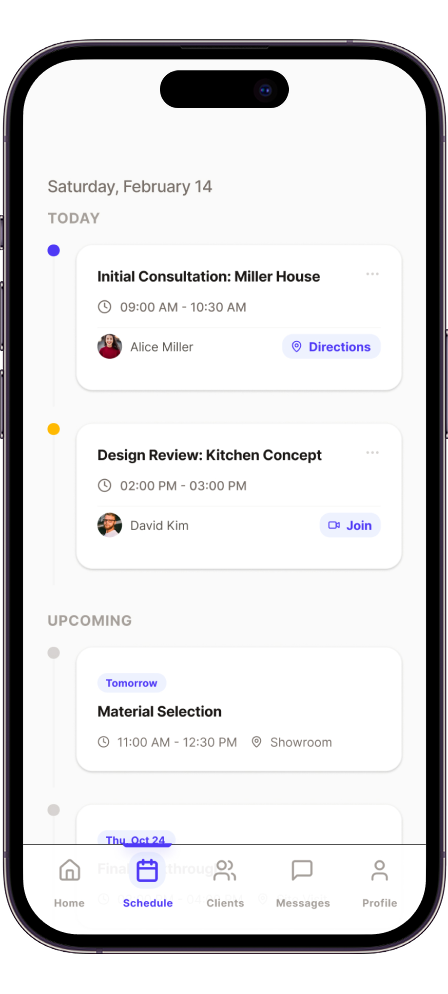
To eliminate the friction of managing two separate accounts, I implemented a global Role Switcher. This allows users to jump between their "Homeowner" and "Professional" dashboards instantly. The entire UI contextually adapts, shifting from a discovery-based consumer interface to a lead-management toolkit for pros, maintaining a consistent design language across both experiences.
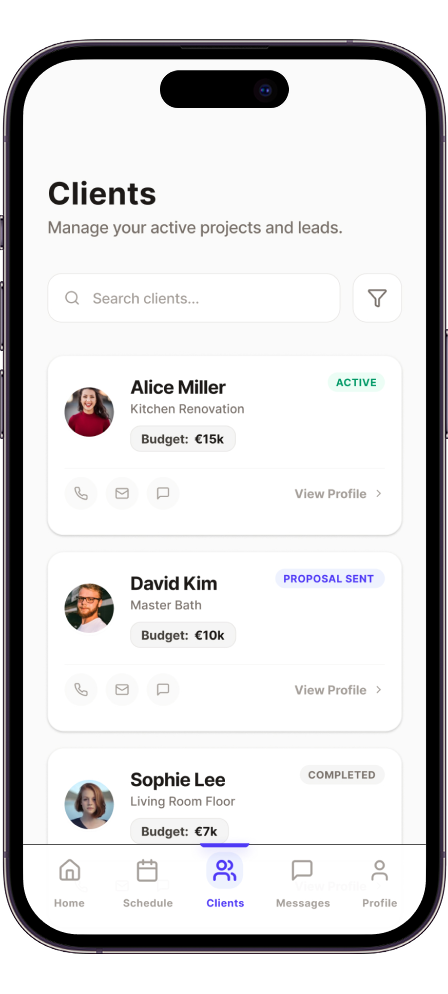
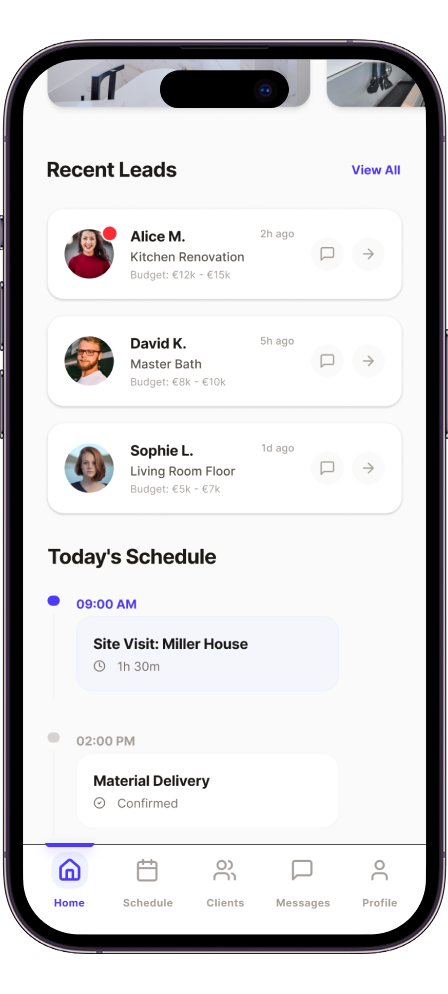
The professional experience centers on lead quality and brand authority. Instead of receiving vague inquiries, professionals are provided with structured project briefs including pre-calculated budgets, timelines, and scope details sent directly to their inbox. This high-signal data allows them to pre-qualify potential clients instantly, saving hours of manual follow-up.
To help pros build a "digital reputation," I designed a portfolio-first profile system. By combining verified client feedback with case-study-style project layouts, the UI acts as a passive marketing engine that builds trust before the first conversation even begins.
Rather than waiting for leads to arrive, the platform features a Project Marketplace that gives professionals the agency to source their own work. Pros can browse a live feed of active homeowner projects, filtering by location and renovation type to find the perfect fit for their current pipeline. To maintain a secure and professional environment, I implemented a gated data system where homeowner contact information is exclusively accessible to verified professional profiles.
Seamless Role Integration
Recognizing that many users in the industry occupy both spaces, I integrated a Global Role Switcher. This allows a user to manage their personal home renovation in "Client Mode" and jump into their business dashboard in "Professional Mode" with a single tap. The entire interface from navigation to toolsets contextually adapts to the active role, ensuring a unified experience across the entire platform ecosystem.